


Could a cleaner’s “eco-friendly” label tell you less than the products and methods they actually use? If you’re comparing eco friendly cleaning services Melbourne providers advertise, look beyond the headline claims. Terms such as “green” and “natural” don’t have a regulated definition for cleaning products in Australia, so clear, specific answers matter.
It’s understandable to want a home that feels fresh without adding unnecessarily to your environmental footprint, but broad claims and one-size-fits-all DIY tips can make choosing tricky. This guide explains how to assess a more eco-conscious clean, from product ingredients and packaging to practical methods. You’ll also learn where vinegar and bicarbonate of soda may help, when they may not suit a surface, and what to ask before booking.
We’ll cover how to compare local cleaners without spending hours researching, including how to check a provider’s product preferences and service details. Whether you’re in Melbourne, Tarneit, Geelong, Truganina, Hoppers Crossing, Werribie, Point Cook or Altona, confirm that a provider covers your suburb before booking. Online marketplaces such as Giggy let you browse vetted service professionals through a website or app. A few focused checks can help you make an informed choice and set clear expectations.
Key Takeaways
- Assess an eco-conscious clean by checking the products used, how they’re applied, avoidable waste and whether the method suits the task.
- Vinegar and bicarbonate of soda can help with some jobs, but they aren’t universal replacements. Combining them doesn’t create a stronger cleaner.
- Choose DIY or professional help based on your time, task list and product preferences. With DIY, you’re responsible for choosing and using products appropriately.
- When comparing eco friendly cleaning services Melbourne providers, ask what products they use, what they bring and whether they’ll use products you supply.
- Set your priorities and agree on the task list before booking. A marketplace can help you browse service professionals in one place.
What makes an eco-friendly cleaning service in Melbourne?
A more eco-conscious clean involves more than a bottle labelled “green”. Consider the products used, how they’re measured and applied, avoidable waste, and whether the method suits the surface and task. An environmental claim is a promise. Product and practice details help show what that promise is based on.
Cleaning agents are substances used to help remove dirt, grease or other unwanted material. Their ingredients and intended uses vary, so ask what a cleaner uses rather than assuming every product works the same way. Your household’s needs matter too: delicate surfaces, pets, children, fragrance preferences or known sensitivities may affect what you want used. Share those priorities before the clean.
Which cleaning practices can reduce unnecessary impact?
Start with the task, then use only the product and amount needed. More product doesn’t automatically mean a better result. The right amount depends on the product directions and the job. Reusable cloths can replace disposable wipes where practical, provided they’re cleaned between uses. Ask the provider how products are stored, diluted and applied, and how they avoid using supplies unnecessarily. These details help you compare the cleaning approach, not just the product labels.
What should Melbourne customers check in a green claim?
Ask for product names or ingredient information, then check the manufacturer’s guidance for intended uses and surface suitability. If a provider mentions an environmental benefit or certification, ask which product or practice it applies to and what information supports the claim. Don’t assume a claim about one product covers the whole service. The best eco friendly cleaning services Melbourne option for your home is one that can explain its choices and work with your priorities.
Look for practical specifics rather than broad assurances. For example, ask whether a product is used for a particular task, whether it comes in refillable packaging, or whether reusable supplies are part of the routine. These details don’t prove an overall environmental outcome on their own, but they give you something concrete to assess. Check claims against manufacturer information, and be cautious if a provider can’t explain what “eco-friendly” means in their service.
Finally, match the method to your home. A product suitable for one benchtop may not be right for another, and some surfaces need a gentler approach. Tell the cleaner about materials that need care, the areas you want prioritised and any products you’d prefer to avoid. A short conversation before booking can help prevent mismatches and set expectations.
Vinegar and bicarbonate of soda: what can they clean?
These pantry staples can help with some household jobs, but they aren’t universal substitutes for purpose-made cleaners. White vinegar is acidic, while bicarbonate of soda is a mild abrasive that can also help absorb odours. Their different properties matter. Choose an ingredient for a specific task rather than assuming “natural” means suitable for every surface.
Check the surface and product instructions before trying any DIY mixture. A familiar ingredient can still damage a finish. Test a small, hidden spot first, and stop if you notice a change in colour or texture. Never mix cleaning ingredients unless their labels explicitly say the combination is safe.
Where might vinegar or bicarbonate be useful?
Vinegar may help with some mineral residue, while bicarbonate can be used gently to tackle certain marks or absorb odours. Results depend on the surface and task, so neither is guaranteed to work everywhere. Use each separately and sparingly, following any relevant manufacturer guidance. Combining vinegar and bicarbonate causes a fizzing reaction, but it doesn’t turn them into a stronger all-purpose cleaner.
Which surfaces and combinations call for caution?
Take extra care with natural stone, delicate finishes and surfaces treated by a manufacturer. Acidic vinegar may be unsuitable for some materials, and an abrasive powder may mark a sensitive finish. If you’re unsure, check the surface care instructions or use a product recommended for that material.
Never combine vinegar with bleach. Mixing them can release harmful chlorine gas. Keep cleaning products in their original containers and follow their labels. Don’t combine household ingredients just because each seems safe on its own.
If you’d rather use a formulated cleaner, look for clear ingredient and use information. The US EPA Safer Choice program explains its product label, but it’s a US programme, not an Australian certification. Treat it as a reference and check what evidence applies to the product available to you. For a task that calls for extra care, you could also browse cleaning professionals and confirm their product preferences and service details before booking. This can help you compare options, including eco friendly cleaning services Melbourne providers, without relying on a DIY mixture that may not suit your home.
DIY eco cleaning or a professional Melbourne cleaner?
There’s no single right choice. DIY can suit routine jobs when you have the time, suitable products and confidence to clean each surface safely. A professional cleaner may be a better fit when your task list is long, your schedule is tight or you’d rather delegate. Either way, “eco” should describe practical choices, not just a label. The American Cleaning Institute’s Green Cleaning overview offers general sustainability guidance. For your home, check product directions and surface-care instructions.
When does DIY cleaning make sense?
DIY can be a practical choice for manageable upkeep, such as wiping benches or tidying visible marks, if you have time and products suited to the surfaces. Follow the manufacturer’s care guidance, test an unfamiliar product on a small, inconspicuous spot and check for any change before continuing. Homemade mixtures still need careful handling and storage. Keep them clearly identified and away from children and pets.
When might a professional cleaner be the better fit?
Consider professional help if a longer cleaning list is competing with work, family or downtime, or if there are tasks you’d rather leave to someone else. Agree on the service scope and product preferences before booking. Ask what the cleaner brings, whether customer-supplied products are accepted and how they’ll approach surfaces that need special care. For broader household guidance, explore a home cleaning services in Australia guide alongside your provider checks.
If you’re comparing eco friendly cleaning services Melbourne options, prioritise a clear conversation over assumptions. Confirm the products and tasks that matter to you, then decide whether DIY control or professional convenience is the better fit for this clean.
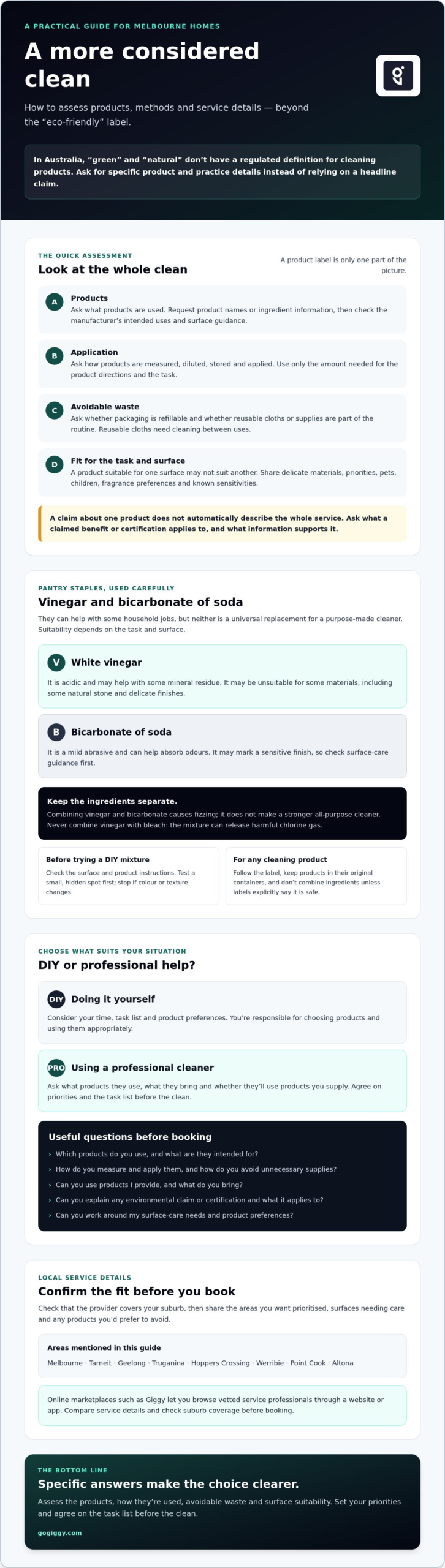
How to assess an eco-friendly cleaner in Melbourne
A few focused questions can make provider claims easier to compare and help avoid surprises on cleaning day. Use this checklist before booking:
- Confirm the service area. Ask whether the provider covers your suburb, whether you’re in Melbourne, Tarneit, Geelong, Truganina, Hoppers Crossing, Werribie, Point Cook or Altona, and whether your requested date can be accommodated.
- Define the scope. List the rooms and tasks you want covered, then check what is and isn’t included in the service.
- Ask about products. Find out what the cleaner brings, which products they use and whether they can share product names, labels or ingredient information.
- Discuss your preferences. Ask if customer-supplied products are accepted. Mention sensitivities, pets, delicate surfaces and any products you’d prefer to avoid.
- Agree on communication and access. Confirm how you’ll share instructions, arrange access and raise questions before the appointment.
Before the clean, confirm the provider’s service area, task list, products, household preferences and communication arrangements. That turns a broad environmental claim into a clearer picture of what the service will involve.
What questions should you ask before booking?
Be specific. Ask, “Which products will you use in the kitchen and bathroom?” and “Can I check their labels or ingredient information?” Explain any household sensitivities, pets or surfaces that need extra care. Then agree on priorities, such as which rooms matter most, what access arrangements are needed and the expected scope of the visit. Clear details give you and the provider a shared plan.
How can you check provider reliability?
Review the information available for each provider, including service details and customer feedback where shown. Look for answers that match your needs rather than relying on a green label alone. If a provider makes an environmental claim, ask what product or practice it refers to and what information supports it. Understanding what screening actually involves is equally important — if you want to know more about what provider checks typically cover, a guide to vetted cleaners near me in Melbourne can help you ask the right questions before booking.
Giggy connects consumers with vetted service professionals, including cleaning providers, and lets customers browse and book through its website and app. Check the details shown for each provider and confirm whether they cover your suburb and can meet your product preferences. Availability can vary, so check whether a suitable service is listed and bookable before making plans.
To compare cleaning providers, browse cleaning professionals on Giggy and review each provider’s service information before booking. Checking the details can make choosing eco friendly cleaning services Melbourne providers less time-consuming.
Book an eco-conscious cleaning service with confidence
A smoother booking starts with knowing what matters in your home. Decide which rooms or tasks need attention, note any surfaces that need special care, and be clear about product preferences such as fragrance or ingredients. Then confirm the cleaner can meet those needs before you book. Clear expectations help you compare eco friendly cleaning services Melbourne providers on their service details, not just a broad green claim.
What should you confirm when arranging the clean?
Before finalising a booking, check the appointment details and agreed service scope. Make sure the task list reflects your priorities, whether that means focusing on particular rooms or flagging areas that are off limits. Confirm access instructions and what products the cleaner expects to use. If you’d like them to use products you supply, ask first and agree on which ones.
Don’t leave uncertainty until cleaning day. If a product preference, surface-care concern or task is unclear, ask the provider to clarify it beforehand. Keep a written record of the agreed details through the booking process, including any instructions you’ve shared. That gives you and the cleaner a handy reference if you need to check the plan.
- Booking: Confirm the appointment details and how access will work.
- Tasks: Agree on rooms, priorities and what’s included in the service.
- Products: Confirm what the cleaner brings and any preferences or supplied products.
- Special considerations: Share relevant sensitivities, pets and delicate surfaces.
How can a marketplace make finding help simpler?
A marketplace can make it easier to discover service professionals in one place. Giggy connects Australian consumers with vetted service professionals, including cleaning providers, and lets customers browse and book through its website and app. Review each provider’s profile and service details, then confirm whether they cover your area in Melbourne, Tarneit, Geelong, Truganina, Hoppers Crossing, Werribie, Point Cook or Altona and can meet your product preferences. Check availability rather than assuming an eco-focused provider or a particular booking option is listed.
Keep the decision straightforward: know what you want cleaned, confirm the products and preferences that matter, and agree on the scope and access arrangements. If a provider’s details don’t answer your questions, ask before booking. That small step can make the process clearer and help the clean go to plan.
Explore the local cleaning services available through Giggy, compare provider details and choose an option that fits your home and priorities.
Make your next clean a more considered one
A greener clean starts with practical choices, not just a label. Check what products a cleaner uses and how they suit your household, surfaces and preferences. Vinegar and bicarbonate of soda can help with some jobs, but they aren’t universal substitutes. Follow surface guidance and use them with care.
Before booking eco friendly cleaning services Melbourne, agree on the task list, access arrangements and product expectations. Ask questions if an environmental claim or service detail is unclear. A little preparation makes it easier to find a cleaner who fits your needs and feel confident about what you’ve agreed.
Giggy connects Australian consumers with vetted service professionals, including cleaning providers. You can browse and book through the website or mobile app, then review individual provider details and confirm they suit your location and preferences. Explore cleaning services and find local help with Giggy.
With your priorities clear and the details confirmed, you’re ready to choose a clean that feels right for your home.
Frequently Asked Questions
Is vinegar and bicarbonate of soda an effective cleaning combination?
Mixing vinegar and bicarbonate of soda creates a reaction, but it doesn’t make a stronger all-purpose cleaner. Each ingredient has different uses, and whether either is suitable depends on the task and surface. Follow product and surface-care instructions, and test an unfamiliar method in a discreet spot first. Don’t mix cleaning ingredients unless their labels explicitly confirm the combination is safe.
Can vinegar be used on every surface?
No. Vinegar is acidic, so it may damage or dull some materials and finishes. Take particular care with natural stone, delicate surfaces and manufacturer-treated materials. Check the care instructions before using vinegar, and test any permitted product in an inconspicuous area first. If you’re unsure, choose a labelled product suited to the surface or ask a qualified professional for guidance.
Are eco-friendly cleaning products always safer?
No. Words such as “eco-friendly” and “natural” don’t confirm that a product is suitable for every person, surface or task. Read the label and follow its use and storage directions. Consider household sensitivities and pets when choosing products. Before a cleaner starts, ask which products they use and whether they can share product information, so you can check it against your household’s needs.
How do I find eco-friendly cleaning services in Melbourne?
To find eco friendly cleaning services Melbourne households can use, first check that the provider covers your suburb. Ask which products and methods they use, whether they can accommodate your preferences, and what tasks the service includes. Mention sensitivities and delicate surfaces. Review available provider details and feedback. Giggy connects consumers with vetted professionals, but check whether suitable cleaners are listed and bookable for your location.
Can I ask a professional cleaner to use my own products?
You can ask, but whether a cleaner accepts customer-supplied products depends on the individual provider and the products involved. Raise it before booking, share the product label or instructions, and explain any relevant surface-care needs or household sensitivities. Confirm what the cleaner will bring and what you’ll need to supply. Agree on the plan in advance rather than assuming your products can be used.
What should I ask an eco-friendly cleaner before booking?
Ask for product names or ingredient information, and check whether the cleaner can accommodate your preferences. Confirm which rooms and tasks are included, and mention pets, sensitivities or delicate surfaces. Check that the provider covers your area, then agree on access arrangements and any preparation expected from you. Clear answers make it easier to compare providers on practical details rather than relying only on broad environmental claims.